Non-Degree Jobs That Qualify for Employment-Based Sponsorship
Employment-based sponsorship often brings to mind highly educated professionals with bachelor’s or advanced degrees. In reality, U.S. employers also sponsor foreign workers who do not have formal degrees. These non-degree roles are critical in sectors such as construction, skilled trades, manufacturing, logistics, healthcare support, and technical services. Employers rely on foreign talent to fill positions that require specialized skills, certifications, or practical experience rather than formal academic credentials.
This article explores the non-degree jobs eligible for employment-based sponsorship, the industries offering these roles, necessary skills, visa pathways, and practical strategies for securing long-term employment in the United States.
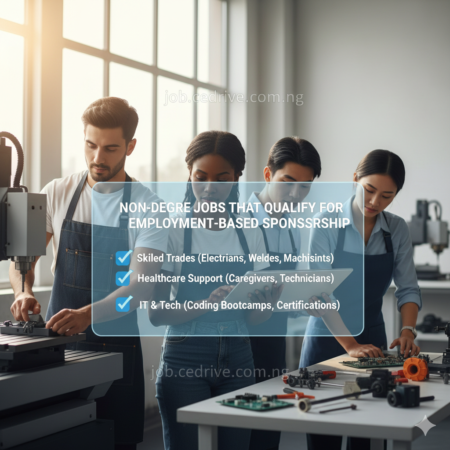
Understanding Employment-Based Sponsorship
Employment-based sponsorship occurs when a U.S. employer petitions on behalf of a foreign worker to obtain a work visa or employment-based green card. Sponsorship enables international professionals to live and work in the United States legally.
Many non-degree roles qualify because employers cannot find enough domestic workers with the right experience, technical expertise, or industry-specific certifications. These positions are essential to operations and business continuity.
Reasons Non-Degree Jobs Receive Sponsorship
Several factors contribute to employers sponsoring non-degree workers:
- Specialized skills: Certain jobs require technical expertise that is rare locally.
- Labor shortages: Industries such as construction, healthcare support, and logistics face chronic shortages.
- Essential operations: Non-degree workers maintain critical infrastructure, manufacturing processes, and supply chains.
- Industry certifications and training: Professional certifications or vocational training often substitute for formal degrees.
Foreign professionals who meet these requirements become valuable candidates for visa sponsorship.
Industries Sponsoring Non-Degree Roles
U.S. employers across multiple sectors offer sponsorship for non-degree workers.
Construction and Skilled Trades
Construction and skilled trades provide numerous opportunities for non-degree workers. Employers hire electricians, welders, carpenters, plumbers, and heavy equipment operators. These roles require hands-on experience, technical certifications, and adherence to safety standards.
Unionized construction projects often sponsor foreign workers to fill labor gaps on multi-year projects, particularly when local labor is insufficient. Non-degree workers with vocational training or apprenticeships find strong opportunities in this sector.
Manufacturing and Production
Manufacturing facilities hire non-degree workers for roles such as machinists, assembly line operators, maintenance technicians, and quality control specialists. These positions demand precision, technical knowledge, and the ability to operate complex machinery.
Employers sponsor foreign professionals to meet demand in specialized manufacturing roles where domestic candidates are limited. Certifications in welding, machine operation, or industrial equipment increase eligibility for sponsorship.
Logistics and Transportation
Labor shortages in logistics and transportation create sponsorship opportunities. Non-degree roles include:
- Commercial truck drivers
- Forklift operators and warehouse staff
- Freight handlers and logistics coordinators
- Delivery and courier specialists
These roles often require practical training, experience, and licenses rather than college degrees. Sponsorship ensures supply chains remain efficient and uninterrupted.
Healthcare Support
Healthcare support roles often qualify for employment-based sponsorship, especially in areas with worker shortages. Positions include:
- Certified nursing assistants
- Medical laboratory technicians
- Home health aides
- Phlebotomists
Certification programs and hands-on training allow non-degree professionals to qualify. Sponsorship helps hospitals, clinics, and long-term care facilities maintain proper staffing levels.
Technical Support and IT
Information technology support and technical assistance roles also offer sponsorship for non-degree workers. Examples include:
- Helpdesk technicians
- Network support specialists
- IT field service technicians
- Software support analysts
Industry certifications such as CompTIA, Cisco, or Microsoft often replace formal degrees. Employers sponsor foreign professionals to meet technical demands in businesses, government agencies, and service providers.
Common Non-Degree Jobs Eligible for Sponsorship
Here are specific non-degree roles that U.S. employers commonly sponsor:
- Electricians, plumbers, and carpenters
- Welders, metal fabricators, and machinery operators
- Heavy equipment operators and maintenance technicians
- Assembly line operators and manufacturing specialists
- Truck drivers, warehouse staff, and logistics coordinators
- Certified nursing assistants, phlebotomists, and lab technicians
- IT helpdesk and technical support specialists
These roles value practical experience, certifications, and technical ability over formal academic qualifications.
Visa Options for Non-Degree Workers
Several U.S. visa programs allow employers to sponsor non-degree workers:
H-2B Visa
H-2B visas allow temporary non-agricultural workers to fill roles such as skilled trades, manufacturing, and hospitality positions. Workers with certifications or demonstrated experience can qualify.
H-1B Visa
While primarily for degree holders, some specialized technical roles with unique skills can qualify for H-1B visas. Non-degree workers with advanced technical expertise or industry certifications may be eligible.
EB-3 Employment-Based Green Card
EB-3 visas provide permanent residency for skilled workers who have at least two years of experience or training. Non-degree workers in trades, healthcare support, or technical positions can qualify under this category.
L-1 Visa
Multinational companies can transfer specialized employees from international offices to the United States using L-1 visas. Non-degree specialists or technical staff with industry knowledge may qualify.
Skills and Qualifications That Matter
Non-degree workers seeking sponsorship should focus on:
- Technical proficiency relevant to the trade or industry
- Hands-on experience with tools, equipment, or processes
- Professional certifications such as welding, CNC operation, or medical training
- Problem-solving and adaptability in practical work environments
- Safety and compliance knowledge in regulated industries
Demonstrating these qualifications increases the likelihood of obtaining sponsorship.
ALSO READ: United States Employers Sponsoring Workers Due to Union Labor Shortages
CHECK: States With the Highest Approval Rates for Visa Sponsored Jobs in the USA
Steps to Secure a Sponsored Non-Degree Role
- Research companies and sectors that sponsor non-degree workers
- Highlight certifications, training, and practical experience on your resume
- Apply to positions offering employment-based sponsorship
- Prepare for interviews by emphasizing hands-on skills and safety knowledge
- Work with employers and immigration specialists to complete visa applications
- Plan relocation and adapt to U.S. workplace culture
Benefits of Non-Degree Employment Sponsorship
- Access to the U.S. job market for skilled workers without a degree
- Competitive pay and benefits in trades, manufacturing, logistics, healthcare, and technical support
- Opportunities for career advancement through long-term projects or promotions
- Networking with experienced professionals across multiple industries
- Pathways to permanent residency via EB-3 or other employment-based visa programs
Challenges for Non-Degree Workers
Non-degree workers may encounter challenges such as:
- Understanding and completing visa application procedures
- Relocating to a new country without local support networks
- Adapting to U.S. workplace safety standards and operational expectations
- Meeting employer productivity and technical requirements
Preparation, training, and research help mitigate these challenges.
Geographic Opportunities for Non-Degree Jobs
Non-degree sponsored roles are more common in regions with high labor demand:
- Urban and suburban construction zones
- Manufacturing hubs in the Midwest, Southeast, and Texas
- Healthcare facilities across metropolitan areas
- Transportation and logistics corridors near ports, railways, and distribution centers
Candidates willing to relocate have better chances of securing visa-sponsored positions.
Future Outlook for Non-Degree Sponsorship
Labor shortages in skilled trades, manufacturing, healthcare support, and logistics will continue to create demand for non-degree workers. Employers will rely on foreign professionals with technical expertise and certifications to maintain operations and complete critical projects.
Employment-based sponsorship for non-degree roles provides a pathway to stable employment, skill development, and long-term career growth. Workers with practical skills, experience, and certifications remain in high demand.
Frequently Asked Questions
Which non-degree jobs qualify for employment-based sponsorship?
Skilled trades, healthcare support, manufacturing, logistics, and technical support roles.
Do I need a college degree to qualify?
No. Many positions qualify with relevant certifications, training, and practical experience.
Can non-degree workers transition to permanent residency?
Yes. EB-3 visas and other employment-based pathways offer permanent residency for skilled workers.
Where are non-degree sponsorship opportunities most common?
Construction sites, manufacturing hubs, healthcare facilities, and logistics centers across the United States.
Conclusion
Employment-based sponsorship is not limited to degree holders. Non-degree workers play a critical role in construction, manufacturing, healthcare support, logistics, and technical services. U.S. employers sponsor foreign professionals to address labor shortages, maintain operations, and complete essential projects.
By demonstrating technical expertise, certifications, and hands-on experience, non-degree candidates can access long-term employment, competitive compensation, and potential pathways to permanent residency in the United States. These roles offer meaningful career opportunities for skilled professionals without formal academic degrees.