Jobs Supporting Federal Climate and Energy Programs
Federal climate and energy programs continue to expand across the United States. These programs influence how the nation produces energy, protects natural resources, strengthens infrastructure, and prepares for climate challenges. As federal investment increases, job creation follows across many industries and skill levels.
Jobs supporting federal climate and energy programs now touch nearly every part of the economy. Workers contribute to clean power generation, resilient infrastructure, environmental monitoring, advanced manufacturing, transportation upgrades, and public program delivery. These careers offer long term stability, steady demand, and opportunities for growth while allowing workers to participate in nationally significant efforts.
This article explores the employment landscape tied to federal climate and energy initiatives. It explains why these jobs exist, which sectors drive demand, what roles employers seek, which skills matter most, and how workers can build long lasting careers in this field.
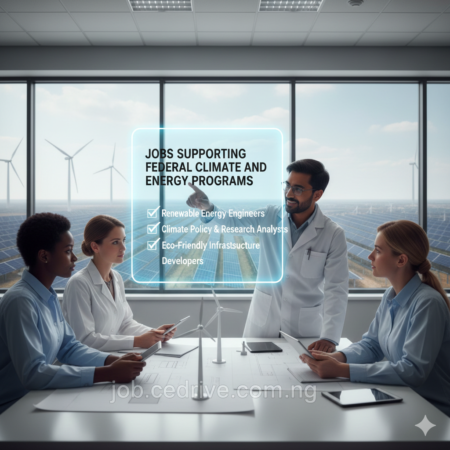
The Purpose of Federal Climate and Energy Programs
Federal climate and energy programs guide national efforts to address environmental risks and energy security. These initiatives focus on reducing emissions, increasing clean energy capacity, improving efficiency, modernizing systems, and protecting communities from climate impacts.
The federal government supports these goals through funding, grants, tax incentives, research programs, and long term planning. Public agencies collaborate with private companies, educational institutions, and nonprofit organizations to carry out projects nationwide.
Each program requires a workforce that can plan, build, operate, evaluate, and manage complex systems over many years. That need creates a wide range of employment opportunities.
Why These Programs Create Strong Job Demand
Federal climate and energy initiatives create employment through sustained investment rather than short term cycles. Projects often span multiple years and require consistent staffing across planning, execution, and maintenance phases.
Job creation occurs through infrastructure construction, manufacturing expansion, research development, environmental oversight, and administrative management. Local communities benefit as projects bring new employers, training programs, and economic activity.
Because energy and environmental systems require ongoing support, many roles remain stable even during economic downturns.
Industries That Support Federal Climate and Energy Programs
Several industries form the foundation of climate and energy related employment.
Clean Energy Production
Clean energy projects remain one of the most visible outcomes of federal climate policy. Solar farms, wind installations, geothermal facilities, hydropower upgrades, and energy storage systems all require skilled labor.
Workers support site assessment, engineering design, equipment installation, testing, operations, and maintenance. These jobs exist in both rural and urban areas and continue long after construction ends.
Energy Efficiency and Building Improvement
Energy efficiency plays a major role in reducing emissions and lowering costs. Federal programs fund upgrades to homes, commercial buildings, schools, hospitals, and industrial facilities.
Employment opportunities include building inspectors, retrofit technicians, electricians, HVAC specialists, insulation installers, and energy performance analysts. These roles improve comfort and efficiency while reducing environmental impact.
Power Transmission and Grid Reliability
Modern energy systems require reliable transmission and distribution networks. Federal investment supports upgrades that allow clean energy to reach consumers safely and efficiently.
Jobs in this area include utility technicians, power engineers, grid operators, infrastructure inspectors, system planners, and maintenance crews. Cybersecurity and data management roles also support grid protection.
Transportation and Mobility Systems
Transportation improvements remain central to climate policy. Federal programs support cleaner vehicles, expanded public transit, and modern infrastructure.
Workers support electric vehicle manufacturing, charging station installation, fleet maintenance, transit system upgrades, and logistics planning. These roles reduce emissions while improving mobility and safety.
Environmental Protection and Climate Research
Environmental monitoring ensures that climate and energy programs deliver real results. Scientists and technicians collect data on air quality, water systems, land use, and ecosystem health.
Employment includes field technicians, laboratory staff, environmental analysts, geospatial specialists, and research coordinators. Their work supports evidence based planning and accountability.
Roles Most Commonly Found in Climate and Energy Programs
Technical and Engineering Careers
Engineers design and oversee systems that support clean energy and infrastructure projects. Employers seek electrical, civil, mechanical, environmental, and systems engineers.
Technicians support installation, calibration, operation, and maintenance of equipment. Many roles value hands on experience and certifications alongside formal education.
Skilled Trades and Field Workers
Skilled trades workers remain essential to climate and energy projects. Electricians, welders, equipment operators, mechanics, and construction specialists build and maintain facilities.
These careers often offer strong wages, clear advancement paths, and union representation in many regions.
Project and Operations Management
Large scale programs require coordination. Project managers track budgets, schedules, contractors, and compliance standards. Operations managers ensure systems function efficiently over time.
Administrative staff support documentation, reporting, procurement, and communication with funding agencies.
Environmental and Sustainability Professionals
Organizations rely on environmental professionals to align projects with regulations and climate goals. Sustainability specialists guide emissions tracking, risk assessments, and performance reporting.
These roles connect technical work with policy objectives and community outcomes.
Manufacturing and Industrial Jobs
Clean energy manufacturing supports domestic production goals. Factories hire workers to produce components such as solar modules, turbines, batteries, and grid equipment.
Roles include machine operators, quality control inspectors, maintenance staff, logistics planners, and production supervisors.
Data Analysis and Policy Support
Data drives decision making in climate programs. Analysts evaluate energy usage, emissions trends, project outcomes, and economic impacts.
Policy professionals translate data into recommendations that guide future investment and regulation.
Employers Involved in Climate and Energy Hiring
Many employer types participate in federal climate and energy programs.
Federal agencies and public utilities
State and local governments
Engineering and construction firms
Renewable energy developers
Manufacturing companies
Research laboratories
Universities and training centers
Nonprofit and community organizations
Private companies often operate under federal contracts or receive funding through grants and incentives.
Skills That Increase Hiring Potential
Employers value practical skills that align with project needs.
Technical knowledge related to energy systems or environmental science
Experience with tools, equipment, or digital platforms
Strong safety awareness and compliance understanding
Clear communication and teamwork
Problem solving and adaptability
Many roles accept training or certification in place of advanced degrees.
Education and Training Pathways
Climate and energy careers offer flexible entry routes.
Apprenticeships support trades and technical roles
Community colleges offer associate programs
Universities provide engineering and science degrees
Certification programs support specialization
Employer sponsored training supports skill development
Federal workforce initiatives often fund training for underserved communities.
Where These Jobs Exist Across the Country
Climate and energy jobs appear nationwide. Regions with renewable resources attract energy projects. Manufacturing hubs support equipment production. Urban centers host research and planning roles.
Rural areas benefit from solar, wind, and grid projects that bring long term employment. Workers often relocate or travel for project based assignments.
Benefits of Working in Climate and Energy Fields
Jobs supporting federal climate and energy programs offer meaningful advantages.
Long term employment stability
Competitive pay and benefits
Opportunities for advancement
Skills that transfer across industries
Work that supports national priorities
Many workers value the sense of purpose these roles provide.
ALSO READ: Visa Sponsorship Opportunities in United States Rural Healthcare Systems
CHECK: How to Move to the United Kingdom Through Employer-Sponsored Management Roles
Challenges to Consider
Some challenges accompany these careers.
Changing technologies require ongoing learning
Regulatory requirements add complexity
Project timelines may vary
Field work can involve travel or physical demands
Workers who remain flexible and committed to training succeed over time.
Career Growth and Advancement Opportunities
Climate and energy careers offer strong mobility. Workers advance into supervisory, technical specialist, consulting, or leadership roles.
Experience on federally supported projects enhances credibility and opens doors across the public and private sectors.
Long Term Employment Outlook
Federal climate and energy investment will continue for decades. Infrastructure upgrades, clean energy goals, and climate resilience planning ensure sustained demand for skilled workers.
Employment growth will remain strong across construction, manufacturing, engineering, environmental services, research, and program management.
Frequently Asked Questions
Do these jobs require advanced education
Many roles accept training, certification, or experience instead of advanced degrees.
Are these jobs temporary
Most projects span multiple years and support long term employment.
Are opportunities limited to certain states
Jobs exist nationwide across urban and rural regions.
Can workers change roles within the field
Yes skills often transfer across sectors and job types.
Conclusion
Jobs supporting federal climate and energy programs represent a stable and growing segment of the United States workforce. These roles support clean energy development, environmental protection, infrastructure resilience, and economic growth.
Workers from many backgrounds can build rewarding careers by contributing to federally supported climate and energy initiatives. As national priorities continue to focus on sustainability and resilience, these jobs will remain essential to the future of work in the United States.