How Automation Gaps Are Driving the Need for Foreign Workers
Automation continues to transform the workplace, promising efficiency, speed, and cost reduction. Businesses in manufacturing, logistics, healthcare, technology, and energy invest heavily in robotics, software, and artificial intelligence to replace routine labor and streamline operations. Yet, despite these investments, companies still face labor shortages. In many cases, gaps in automation are increasing demand for skilled foreign workers.
This article explores why automation gaps create hiring opportunities for international talent, identifies industries most affected, highlights roles most commonly sponsored, and provides guidance for workers looking to take advantage of these trends.
The Paradox Between Automation and Labor Demand
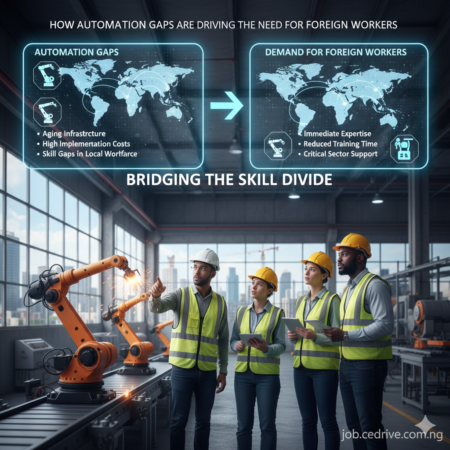
Automation is meant to reduce dependence on human labor. In theory, it should replace repetitive tasks and lower workforce needs. In practice, many companies cannot fully automate processes. Several factors contribute to this reality.
High Costs of Full Automation
Advanced robotics and artificial intelligence require significant capital investment. Smaller companies may not have the financial resources to automate fully. Even large organizations often find complete automation cost-prohibitive, especially for specialized processes.
Technical Limits
Not every process can be automated. Some tasks require judgment, creativity, or hands-on expertise. Quality control, complex assembly, custom manufacturing, and nuanced problem solving still depend on human labor.
Need for Skilled Maintenance
Automation systems require skilled professionals to install, operate, maintain, and troubleshoot equipment. When local labor markets cannot supply workers with these skills, employers turn to foreign professionals.
Rapidly Evolving Technology
Automation technology evolves faster than many workers can adapt. Companies need professionals who already understand emerging systems rather than retraining local employees who may be trained in outdated tools.
These gaps create a demand for foreign workers with expertise in operating, maintaining, and optimizing partially automated systems.
Why Employers Sponsor Workers Due to Automation Gaps
Businesses sponsor foreign workers for positions affected by automation shortages for several reasons.
Specialized Expertise
Automation does not eliminate the need for skilled workers. Companies require personnel to operate advanced machinery, maintain robotics, program artificial intelligence systems, and integrate software platforms. Many foreign workers possess these skills, making sponsorship the preferred option.
Immediate Productivity
Training local employees for complex systems can take months or years. Sponsoring experienced foreign workers allows companies to maintain production schedules and meet project deadlines.
Cost Efficiency
Although sponsorship involves administrative costs, visa fees, and relocation expenses, hiring a worker who can perform immediately is often more cost-effective than investing in extensive training for local staff.
Reduced Operational Risk
Experienced foreign professionals reduce errors, prevent downtime, and maintain production quality. Their expertise ensures that automated systems operate reliably and meet safety and performance standards.
Long-Term Workforce Stability
Automation systems often support projects lasting several years. Sponsoring workers ensures continuity and reduces turnover risk compared to training local staff who might leave after completing training.
Industries Most Impacted by Automation Gaps
Certain sectors face the greatest challenges from incomplete automation, which leads to increased sponsorship of foreign workers. These include manufacturing, logistics, healthcare, energy, technology, and construction.
Manufacturing
Manufacturing has embraced robotics and automated assembly lines, yet skilled operators, maintenance technicians, and process engineers remain essential. Full automation of complex manufacturing processes is often impractical.
Roles commonly sponsored include:
- Robotics engineers
- Industrial automation technicians
- Process engineers
- Quality control specialists
- Production supervisors
These positions require expertise often lacking in local labor markets, particularly for highly specialized or advanced machinery.
Logistics and Supply Chain
Automated warehouses and logistics software systems have improved efficiency. However, human expertise is still required to manage transportation networks, optimize inventory, and troubleshoot automated operations.
Roles frequently sponsored include:
- Supply chain analysts
- Warehouse automation specialists
- Logistics managers
- Transportation systems engineers
- Inventory optimization professionals
Sponsoring skilled foreign workers ensures smooth operation of partially automated logistics networks.
Healthcare
Hospitals and medical facilities increasingly use robotic surgical systems, automated diagnostics, and electronic health records. Skilled professionals must operate, monitor, and maintain these technologies.
Roles commonly sponsored include:
- Robotic surgery specialists
- Laboratory automation technicians
- Health IT administrators
- Clinical engineers
- Medical software developers
Sponsorship ensures healthcare providers maintain quality and meet patient care standards.
Energy and Utilities
Energy production and distribution increasingly rely on automation, including smart grids, renewable energy systems, and industrial control software. Skilled technicians are essential to install, monitor, and maintain these systems.
Sponsored roles include:
- Electrical engineers
- Industrial control specialists
- Renewable energy technicians
- Grid automation engineers
- Energy management analysts
Foreign professionals provide the expertise required to operate and optimize automated energy infrastructure.
Technology and Software
Automation in technology, including cloud infrastructure, artificial intelligence, and DevOps processes, requires highly skilled personnel to implement and maintain systems.
Roles often sponsored include:
- Software developers
- Cloud architects
- AI engineers
- Data scientists
- Cybersecurity specialists
Sponsorship allows companies to maintain innovation and ensure stable operations in environments where automation alone cannot replace human expertise.
Construction and Infrastructure
Construction projects increasingly adopt automation, including robotic equipment, 3D printing of building components, and automated surveying. Skilled operators and engineers remain critical to execute projects safely and efficiently.
Roles frequently sponsored include:
- Construction automation technicians
- Civil engineers experienced with robotics
- Project managers overseeing automated systems
- Surveying specialists
- Heavy machinery programmers
Sponsoring foreign workers ensures projects remain on schedule and meet safety and quality standards.
ALSO READ: Visa Sponsorship Opportunities in Government-Funded Projects
CHECK: Care, Health, and Social Work Jobs With Immediate Visa Sponsorship
Factors Influencing Sponsorship Decisions
Automation gaps influence employer decisions regarding foreign worker sponsorship in several ways:
- High-skill roles requiring technical expertise receive priority.
- When training local workers is more expensive than sponsorship, employers choose international hires.
- Urgent project timelines favor immediate hiring of qualified personnel.
- Complex systems combining software and hardware require workers with multiple technical competencies.
- Long-term projects benefit from continuity provided by sponsored employees.
These factors explain why high-skill positions in automation-heavy industries are more likely to offer sponsorship opportunities.
Benefits of Sponsoring Workers to Address Automation Gaps
Companies gain multiple advantages from sponsoring foreign professionals:
- Immediate operational competence without lengthy training periods
- Higher productivity and reduced system downtime
- Knowledge transfer to local staff
- Stability for long-term projects
- Enhanced innovation through diverse problem-solving approaches
Sponsorship provides both short-term operational solutions and long-term workforce benefits.
Challenges in Sponsoring Foreign Workers
Despite its advantages, sponsorship carries challenges:
- Compliance with visa regulations requires administrative effort.
- Relocation and integration support consume resources.
- High demand for skilled automation professionals creates competition.
- Teams may need to adjust to accommodate foreign expertise.
Employers weigh these challenges against the benefits of hiring skilled foreign professionals who can operate and maintain partially automated systems effectively.
How Job Seekers Can Leverage Automation Gaps
International professionals can increase their chances of sponsorship by:
- Developing expertise in robotics, AI, industrial automation, and software integration.
- Obtaining relevant certifications and credentials.
- Gaining practical experience with automated systems and project-based work.
- Targeting companies that implement automation and sponsor international hires.
- Demonstrating the ability to contribute immediately without extensive onboarding.
By aligning their skills with automation-dependent roles, workers can access opportunities that bridge the gap between technology and human labor.
Post-Pandemic Trends
The pandemic accelerated automation adoption across multiple industries. Companies implemented robotics, AI, and software solutions to maintain operations during labor shortages. Despite automation, the need for skilled workers capable of operating and maintaining these systems increased.
Government incentives, private investments, and demand for operational continuity have amplified sponsorship opportunities for foreign professionals in technology, healthcare, logistics, manufacturing, and energy sectors. Streamlined visa processes for critical occupations have further facilitated hiring international talent.
Conclusion
Automation is transforming industries worldwide, but it cannot completely replace skilled human labor. Gaps in automation increase the demand for foreign workers capable of operating, maintaining, and optimizing advanced systems. Employers sponsor international professionals to address shortages, ensure project continuity, and maintain productivity in high-skill, automation-intensive roles.
Industries such as manufacturing, logistics, healthcare, technology, energy, and construction provide numerous sponsorship opportunities. International professionals who develop relevant skills, gain hands-on experience, and target sponsoring employers position themselves to take advantage of these trends.
Automation reduces routine labor, but it also amplifies the need for specialized expertise. Sponsorship offers a pathway for skilled workers to contribute meaningfully while helping companies overcome gaps in automation and achieve operational success.